Efforts were made to resolve the hostage situation in Gaza through negotiations before the start of Ramadan, some progress was made, but no agreement was reached and none of the kidnapped were recovered. The release of the prisoners by force of arms produced almost as bad a result, only one body was managed to be recovered.
The situation has to be understood as far as Hamas is concerned, it is the terrorist organization’s last trump card. From Israel’s point of view, the concern is that a prolonged cease-fire would allow Hamas’s terror to continue while the organization is able to replenish its stocks, especially since Israel is in any case increasing humanitarian aid to Gaza to the numbers that prevailed before the war. COGAT has reported that 419 aid trucks arrived in Gaza on April 9, 2024 – the largest number of trucks in one day since the war began. The previous record was reached the day before with 322 trucks.
There are conflicting reports coming out of Cairo about a possible hostage release/prisoner swap deal between Israel and Hamas. The United States has taken a meaningful lead and is putting heavy pressure on brokers. The US proposal is far-reaching; it includes a very broad mandate… All the elements are there – IDF forces and the return of Gazans to the northern Gaza Strip.” Defense Secretary Gallant has stated: “We are prepared to make difficult decisions to get the hostages back. I believe that we are at a good stage for an agreement.”
Hamas officials, meanwhile, told international media that the current proposals still fell well short of their minimum requirements. A senior Hamas official, Ali Baraka, said: “We reject the latest Israeli proposals that were communicated to us by the Egyptian side. The Politburo met today and decided this.” Hamas has also stated that the obstacle to the agreement is that Hamas does not have in its possession the 40 women, children, over 50 years old or wounded persons presented by Israel for the exchange of prisoners. This may indicate that more hostages than expected are already dead or in the possession of, for example, the PIJ (Islamic Jihad) organization.
When 133 hostages were kidnapped, it is feared that only half are still alive. The basic formula of the deal presented during the negotiations is believed to include the release of approximately 40 Israelis from Hamas in exchange for several hundred Palestinian prisoners in Israel.
Prime Minister Netanyahu has once again come under pressure from the far-right members of his coalition. Finance Minister Smotrich and National Security Minister Ben Gvir both complained that the broader Security Cabinet had been sidelined and that crucial decisions on flexibility for Israeli negotiators and other aspects of the war were made only by the narrower War Cabinet.
Israel’s military withdrawal from the southern parts of Gaza can be interpreted as a concrete demonstration of its flexibility and openness to the hostage agreement. It may be about this or the rest of the forces during the ceasefire, however, the operation in Rafah seems likely, for example, after the ceasefire – according to some estimates, within 1-2 months.
One IDF infantry brigade is still stationed along the east-west corridor blocking access to the north. Defense Secretary Gallant stated: “The troop withdrawal from Khan Younis was carried out when Hamas ceased to be a military force in the city… The achievements of the IDF Division 98 and its units are very impressive. They have eliminated terrorists and destroyed terrorist targets such as warehouses, weapons, headquarters, communication centers and more. Their actions made it possible for Hamas to disintegrate as a functioning military unit in this region.”
The withdrawal of troops will now facilitate the return of Gazans who fled to Rafah to Khan Yunis.
Talks could be slowed by the fact that Hamas leader Ismail Haniyeh’s three sons – Hazem, Amir and Mohammad – were killed in an Israeli airstrike in the Gaza Strip on Wednesday [10/04/2024], the Palestinian Islamist group and Haniyeh’s family said. The Israeli military confirmed the attack and described the three boys as operatives of the armed wing of Hamas. Haniyeh has 13 children in total.
People look at the car in which three sons of Hamas leader Ismail Haniyeh were killed in an Israeli air strike near Al Shati, Northwest of Gaza City, on April 10. AFP/Getty Images
Ismail Haniyeh learned of the killing of his children while visiting wounded Palestinians who were taken to Doha for treatment. Attention was attracted by the video of Haniyeh’s relatively emotionless reaction to the information, Haniyeh simply stated “May God be merciful to them” and immediately continued her visit. The explanation for the reaction has been considered to be the valued importance of martyrs in the local culture.
At the same time as the hostage agreement, Israel is preparing for a retaliatory attack by Iran due to the recent killing of a general in the Iranian Revolutionary Guard. According to estimates, the attack will not take place directly from Iran, but from Syria, Lebanon or Yemen. Possible Israeli casualties again affect the strength of the counterattack and the chosen targets.
n exellent article in Time -magasine: The New Antisemitism by Harvard Law School professor Noah Feldman (@NoahRFeldman) in an essay https://ti.me/3Igvs8G
The Al-Rashid Humanitarian Aid Distribution Disaster [Flour Massacre] refers to an incident in Gaza on February 29, 2024, in which, according to Palestinian sources, at least 118 Palestinian civilians were killed and at least 760 were injured after Israeli forces allegedly opened fire on civilians stealing food from aid trucks. (Initial reports say 50 people were killed. The Palestinian Foreign Ministry confirmed the incident, saying 70 people were killed and at least 250 wounded).
According to the Israeli Defense Forces (IDF), most of the victims were trampled in the crowd caused by looters and aid trucks ran over the crowd. The Israeli military fired warning shots to quell the looting, also firing on Gazans who charged IDF forces protecting aid convoys in two related incidents.
The aid convoy was one of at least four that Israel organised in a new partnership with local Palestinian businessmen to northern Gaza, where international groups have suspended most operations due to looting and security threats. In order to deliver food to northern Gaza, local Gazan businessmen organised the trucks with the IDF in charge of security and the aid trucks travelled the humanitarian corridor organised by the IDF.
IDF spokesman Rear Admiral Daniel Hagari held a press conference where he confirmed that Israel was involved in facilitating the aid convoy and denied that the IDF had struck the aid convoy. Hagari also claimed that the IDF had fired warning shots to try to disperse the crowd that attacked the aid convoy and that IDF forces had begun to withdraw from the scene when the looters began to pose an immediate threat to the troops present. Hagari explained that it was because of this threat that IDF soldiers were forced to respond.
Hagari stated “We have started an investigation to investigate the incident further, which will help reduce the risk of such a tragic incident happening again during one of our humanitarian operations. The incident is investigated by the Fact-Finding and Evaluation Mechanism, which is an independent, professional and expert body. In the interest of transparency, we will share our updates as the investigation develops, hopefully in the coming days.”…Hagari stressed “We will continue to expand our humanitarian efforts to the civilian population of Gaza while achieving our goals of freeing our hostages from Hamas and liberating Gaza from Hamas.”
The UN’s World Food Program (WFP) has previously stated that the overwhelming lawlessness prevailed in the region, which has made it difficult to transport aid to Gaza. According to the New York Times, the aid convoy that ended up in disaster on Thursday was part of a new Israeli operation to get desperately needed food to Gazans by working directly with local businessmen.
Israel was involved in organising at least four such aid convoys to northern Gaza last week after international aid groups suspended operations in the region, citing rising lawlessness. Some residents have resorted to looting the pantries of abandoned homes. UN aid convoys carrying essential goods to northern Gaza have been looted either by civilians fearing starvation or by organised gangs. Israel’s aid efforts sought to fill the vacuum left by the United Nations and other aid agencies. On Thursday, this company experienced a setback against the Israeli designers.
Israeli military officials contacted several Gazan businessmen and asked them to help organize an aid convoy to the north, according to two Palestinian businessmen involved in the operation, Izzat Aqel and Jawdat Khoudary. Mr. Aqel said in an interview with The New York Times that he helped deliver some of the trucks involved in Thursday’s ill-fated convoy. According to him, an Israeli military officer had called him about 10 days earlier and asked him to organise aid trucks to northern Gaza with as much food and drink as possible. According to Mr. Aqel, as of this week, the operation’s first three convoys — each of 15 to 25 trucks — had entered northern Gaza without any problems. Some were relief trucks sent by him, while others were organised by other contractors. The convoy, which ended in bloodshed, left the Kerem Shalom crossing between Israel and Gaza before heading to northern Gaza, aiming to reach areas that had not seen aid for weeks, Aqel said.
237 trucks carrying humanitarian aid were inspected and transferred to Gaza for the civilian population yesterday (Mar. 7). 222 trucks were distributed by aid organizations to shelters and Gazans in need.
Overnight, 13 food trucks made their way to northern Gaza, all by the private sector. Over the last few days, over 120 trucks were transferred to the northern Gaza Strip.
Yesterday, (Mar. 7) 4 tankers of cooking gas designated for the operation of essential infrastructure in Gaza, have entered the Gaza Strip.
Truck convoys by UNICEF via the Jordan delivery channel entered Gaza yesterday (Mar. 7). UNICEF began using this route in addition to WFP.
232 packages were airdropped by Egypt and UAE yesterday (Mar. 7). Since the start of the war, and in cooperation with the USA, UAE, Egypt, Jordan, Holland and France, 26 airdrops have taken place, airdropping over 1200 packages of humanitarian aid, most to northern Gaza.
46 foreign nationals are expected to exit the Gaza Strip today (Mar. 8), 55 foreign nationals exited yesterday.
A United Arab Emirates floating hospital docked at the El-Arish port on Feb. 22 and began receiving Gazan patients for treatment.
20 bakeries are operational in Gaza, providing over 2.5 million breads, rolls, and pita breads a day for the local population.
The coordination of the repair of vital infrastructure was successfully completed.
Today, (Mar. 9) between 10:00 and 14:00, the IDF will pause operations in the Rafah refugee camp in Rafah, southern Gaza Strip, in order to enable movement of humanitarian aid.
Late on Thursday [February 22, 2024], Israeli Prime Minister Benjamin Netanyahu revealed his proposal for the “Day after Hamas” to the War Cabinet for the first time. The plan for post-war Gaza includes “demilitarization” of the enclave, control of the Palestinian territories and the closure of the aid organization UNRWA.
Netanyahu had previously cancelled the war cabinet’s discussions on the Gaza plans, leading to “significant pressure” from government partners and international leaders to sharpen the plans, especially as ceasefire talks are currently underway and protests demanding the release of the hostages in Israel are expanding.
Israel’s war cabinet decides on all matters related to the ongoing war and its termination. The cabinet includes Netanyahu, Defense Minister Yoav Gallant and opposition representative Benny Ganz as regular members, and Ron Dermer and Gadi Eizenkot as observer members, but not the far-right ministers of the governing coalition. The cabinet is under great external and internal pressure due to the Gazan humanitarian crisis and the release of hostages related to the ceasefire negotiations. The former head of the armed forces Eizenkot states directly “I think it is necessary to say boldly that it is impossible to get the hostages back alive in the near future without an agreement”.
Netanyahu’s “plan”
In Netanyahu’s plan, the IDF will continue fighting with the goal of destroying the military assets and regime infrastructure of Hamas and Palestinian Islamic Jihad (PIJ) and preventing them from posing a future threat. In addition, Israel continues to bring hostages home.
In the second, mid-term phase, Israel maintains freedom of action in the Gaza Strip. Israel is working with Egypt and the United States to ensure that arms smuggling from Egypt to Gaza ends and that the Gaza Strip is demilitarised. Israel seeks to strengthen Gazan’s “civilian administration” based on “local individuals with administrative experience and no ties to countries or organisations that support terrorism.”
Netanyahu’s plan talks about the need to “de-radicalize all religious, educational and welfare institutions in the Gaza Strip.” This would also include shutting down UNRWA and replacing it with other international welfare organisations.
In the long term, Netanyahu “completely rejects the international dictates of a permanent settlement with the Palestinians.” Possible arrangements can only be reached in direct negotiations between the parties without preconditions. Accordingly, Israel remains opposed to the unilateral recognition of a Palestinian state.
The IDF is expected to launch a pilot program in the Zeitoun neighborhood of Gaza City, where local civilians – including merchants and civil society leaders – will take over the administration of the area from Hamas. The civil authority managing the new administration aims to take responsibility for, among other things, the distribution of humanitarian aid, a large part of which currently ends up in the hands of Hamas.
Netanyahu as part of the problem and not necessarily its solution
Netanyahu has a big personal problem formulating a “day after the war” vision or strategy due to different domestic and foreign political visions and the personal need to stay in power. Netanyahu’s finance minister, coalition partner Bezalel Smotrich, has said that the Palestinians should move out of Gaza, and his attitude towards Israel’s Arab population has not been very favourable. In recent weeks, far-right Interior/Police Minister Itamar Ben-Gvir has tightened his rhetoric against the war cabinet, warning that he would not be a rubber stamp for the policies he opposes. The disintegration of the government could lead to early elections, which Netanyahu would clearly lose according to opinion polls.
In the past, going back to his Bar Ilan speech in 2009 and then Trump’s peace plan, Netanyahu has cautiously embraced the principle of a demilitarised Palestinian state. Forging such approval now is more difficult because of his far-right government partners.
Epilogue
It is not known whether a more detailed version of Netanyahu’s “plan” is in use by the war cabinet and the government, and if so, whether the versions differ from each other. It can also be about presenting the starting points of the negotiation arrangement in the direction of foreign powers, the political wing of Hamas and the Palestinian Authority. As such, I consider Netanyahu’s initiative to be very narrow-minded, in my view, it lacks a vision and scenarios for improving the living conditions of Gazans and, more broadly, Palestinians, not to mention the Two-State model.
Netanyahu’s “plan” does not respond in any positive way to the “Day After War” plans currently being considered in the United States and several Arab countries, in which one of the central parts is the solution of the Palestinian issue as part of the normalisation of Arab countries’ relations with Israel.
I have covered the matter in the article A Day After the Gaza War -Plan where I propose three level plan in order to solve the humanitarian crisis of the Gazans immediately, to rebuild the destroyed Palestinian territory in the medium term and to implement the Two-State solution in the long term. I also have made a new Road-map to 2-State solution .
The humanitarian situation in Gaza is becoming even more difficult after the Israeli army extended its war against Hamas south to Khan Younis and plans to attack the last intact Hamas underground bases in Rafah. The international community, including the United States, has demanded that Israel protect Gazan civilians when the attack begins on a larger scale soon. The civilian population that moved to the south has previously been offered a safe zone in the Al-Mawas area on the shores of the Mediterranean Sea. Relief for the plight of Gazan civilians may also be found on the Egyptian side.
Since the beginning of the war, Egypt has tried to strengthen its own security at the border to keep the Palestinians out, by sending soldiers and armored vehicles and strengthening border fences. Now, however, The Wall Street Journal has obtained satellite images, which show that concrete walls have been erected in the area intended as a refugee camp. Satellite images taken in 4.-14. February show that the ground in the area has also been cleared. According to WSJ information, the Egyptian refugee camp is being prepared in case of an Israeli ground attack. Egyptian local authorities deny this.
According to unconfirmed information, it is an area of about eight square miles or 20.7 square kilometers on the Egyptian side of the border with Gaza.
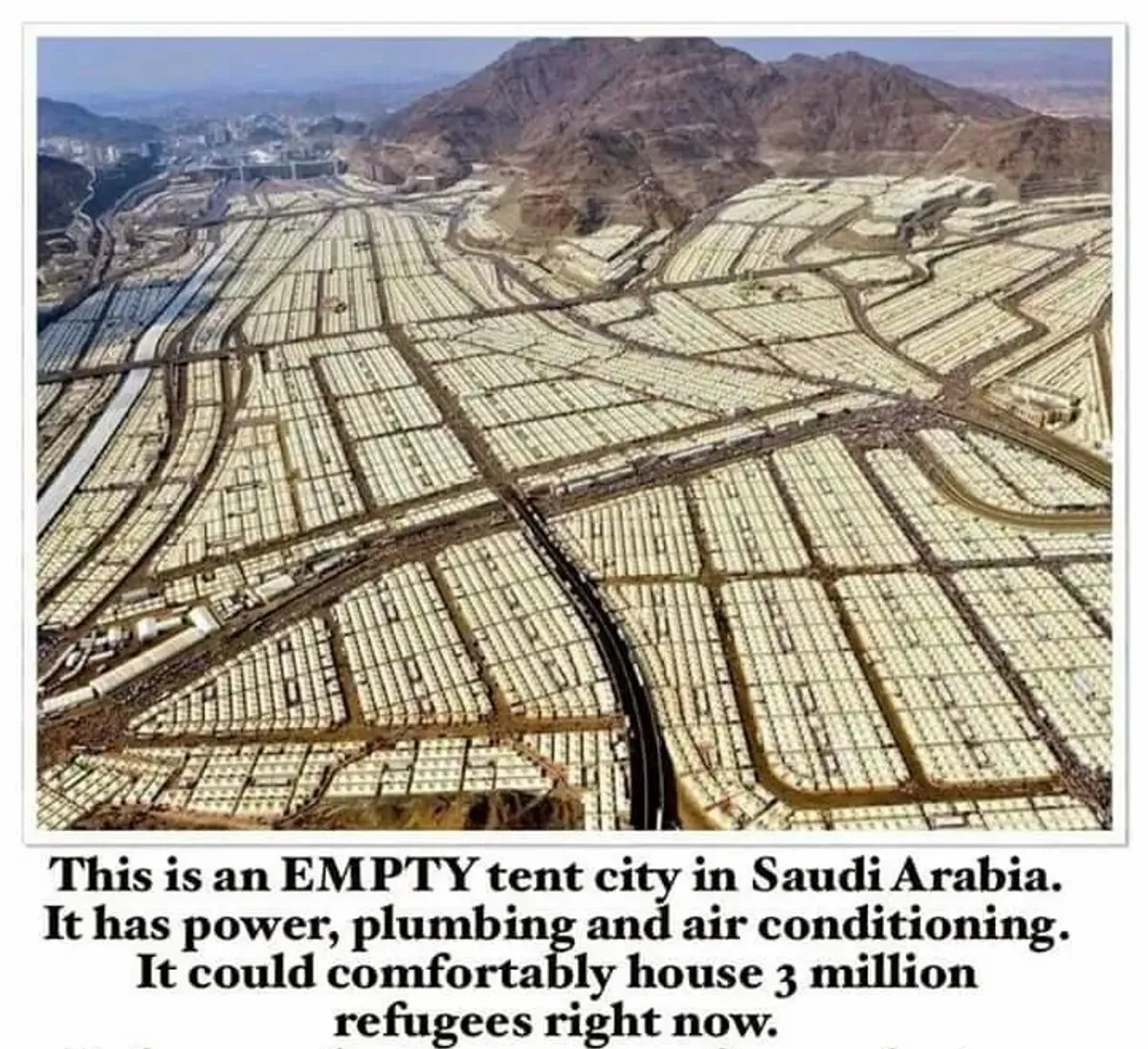
The Mina Valley is located 8 kilometers southeast of the city of Mecca in the Hejaz region of Saudi Arabia and is commonly known as the “City of Tents”. In Mina, the largest tent city in the world has been built on an area of about 20 km2 – so comparable in size to the refugee camp that is apparently being built on the Egyptian side – and it can accommodate up to three million pilgrims in more than 100,000 air-conditioned tents.
The tents themselves come in three sizes: eight square meters, six x eight meters or 12 x eight meters. The tents are connected to each other through paved, lighted and signposted corridors. 9,000 standard and electric wheelchairs have been reserved for pilgrims who need them.
In Mina’s tent city, you can find all the basic comforts of living, and in addition, air conditioning and modern means of communication are available. In addition to water and electricity, each tent has automatic fire sprinklers. The streets are equipped with multilingual street signs and service shops and clinics have been established in all areas. Other services include Masjid al-Khayfi’s 20,000 m2 mosque, which is the largest in Mina’s tent city.
In the past, pilgrims came to Mecca with their own tents, often made of cotton, and this caused a fire hazard. Now the tents are made of fiberglass, while the outer surface is Teflon. The new tent fabric has a lifespan of 25 years and can help protect against fire, wind, corrosion and also has an anti-slip surface. Its structure is easy to change, and the sunlight filter in the material keeps out about 90 percent of the sun’s rays.
Each subcamp is equipped with a kitchens, bathrooms and washing facilities, and they are connected to other camps by trails. The tents are also marked with unique color and number pairs to make them more recognizable.
For most of the year, Mina’s tent city is empty and it has been considered in the past, for example, as a place to stay for Syrian refugees; However, Saudi Arabia did not want to take refugees there. This will probably be the situation even now, even if all Gazans could be accommodated there even immediately. However, Mina’s experiences are useful for the Gazans, whether the location is in Gaza or on the Egyptian side.
In order to solve the humanitarian crisis of the Gazans immediately, to rebuild the devastated Palestinian territory in the medium term, and to implement a two-state solution in the long term, I published in early January a three-phase A Day After the Gaza War plan that I consider both pragmatic and feasible. The mentioned presentation is based on the implementation of the so-called Sinai option, the first step of which was the construction of a temporary refugee camp on the Egyptian side of the Gaza border. If the first phase of the plan is being implemented, it also creates a good basis for the next two phases.
If a refugee camp is built for the Gazans, it should be made permanent like Mina’s tent city. If a more permanent urban settlement for the Gazans is (re-)built in either Gaza or Sinai, the tent city would be ready to receive new groups of refugees from different regions, or it could also serve as a temporary reception center for asylum seekers seeking Western countries. The use of the area should naturally be agreed with Egypt with appropriate compensations.
Annex: Sinai for Human Rights’ tweet about the Sinai camp
Egypt to create a gated high-security area in the reception of Palestinian refugees from Gaza
The Sinai Foundation obtained information through a relevant source that indicates that the construction work currently taking place in eastern Sinai, is intended to create a… pic.twitter.com/8Xe1H7t9O0
The Israel Defense Forces (IDF) have uncovered a clandestine subterranean data centre belonging to Hamas, nestled beneath the headquarters of the United Nations Relief and Works Agency for Palestine Refugees (UNRWA) in the Gaza Strip. The sophisticated server farm, equipped with an electrical room and accommodations for Hamas IT personnel, was strategically positioned directly beneath the UN agency’s complex in Gaza City’s Rimal neighbourhood, reported Times of Israel.
The sprawling tunnel system under the UNRWA HQs ran nearly 60 feet deep and a half-mile long, with one of 10 entrances found near a UNRWA school.
A subterranean Hamas data center underneath UNRWA’s headquarters in Gaza City, February 8, 2024. (Emanuel Fabian/Times of Israel)
UNRWA’s Gaza headquarters is located in Gaza City’s upscale Rimal neighborhood, an area that the IDF had previously operated in, dismantled the local Hamas battalion and withdrawn its troops from. At the time of the initial ground offensive in Gaza City, the military had not found or known much about the Hamas data center. But new intelligence, primarily emerging from the Shin Bet interrogations of captured terrorists, helped pinpoint where to dig.
The IDF invited reporters for Israeli and foreign news outlets, like The Wall Street Journal, Reuters and The Associated Press, to view the site earlier last week. The Times of Israel reports about the discovery:
The main entrance to the tunnel was located under a UNRWA school in the area. The first stretch of the 700-meter-long tunnel was relatively unremarkable, similar to hundreds of kilometers of underground passages the terror group has built across the Gaza Strip. The passage had several other branching paths. The route we followed led to a small hole, which after climbing through, revealed a large hallway with flooring, wall tiles, air conditioning and lighting fixtures. The hallway was plastered with posters bearing the logo of Hamas’s military wing, the Al-Qassam Brigades, some with operational security instructions for the terrorists managing the data center. In this part of the tunnel Hamas IT and intelligence staff would supervise and manage the data center. Along the hallway, there were several rooms, including a kitchenette, a meeting room with office chairs, two bathrooms and living quarters with several mattresses. Also in the hallway, troops found several small mobility scooters, thought to have been used by Hamas to traverse through the tunnel’s facilities with ease. From the main hallway, a 300-meter passage led to the data center and nearby electrical room. There Hamas kept its intelligence servers.
An electrical room serving an underground Hamas data center, beneath the UNRWA headquarters, uncovered by the IDF in Gaza City, February 8, 2024. (Emanuel Fabian/Times of Israel)
“The IDF was here previously, the first time was to destroy the enemy, but when we were here the last time we collected a lot of intelligence documents and findings, a lot of prisoners, and thanks to this we reached here. Now we carried out a targeted operation to take this capability away,”said the commander of the 401st Armored Brigade, Col. Benny Aharon. The IDF also said that in some of the offices of UNRWA officials, troops found equipment and documents that indicated that the same offices were also used by Hamas terrorists. “There is no doubt that UNRWA staff knew that [Hamas] was digging a massive tunnel beneath them,” Aharon said. “There’s a perimeter wall, a gate, cameras, at the gate they log who comes in and out. Whoever worked at UNRWA knew very well who was coming in, and who they were covering for…UNRWA provides cover for Hamas, UNRWA knows exactly what is happening underground, and UNRWA uses its budget to fund some of Hamas’s military capabilities, this is for certain,” he said.
At the main building in the UN complex, Aharon led the reporters to UNRWA’s server room, which he said sits directly above the underground Hamas data center, where the reporters had been a short while earlier. “Some of the cables connect down,” he said, showing a line of cables running down to and into the floor, as reporters stood above the Hamas data center. The IDF said the electrical cables leading from the UN building to the tunnel were providing power to the Hamas infrastructure belowground.
Israeli forces have discovered a vast tunnel network running under UNRWA’s Gaza headquarters, providing new evidence of Hamas exploitation of the relief agency for Palestinians.
UNRWA chief Philippe Lazzarinideniedany knowledge of the Hamas center uncovered by the IDF. UNRWA “did not know what is under its headquarters in Gaza,”. Israel’s Ambassador to the United Nations, Gilad Erdan, also called for the UNRWA Commissioner-General to resign, responding“it’s not that you didn’t know, it’s that you didn’t WANT to know…Philippe Lazzarini’s claim of unawareness is not only absurd but also an affront to common sense. His prompt resignation is imperative.”
TBN Israel’s Yair Pinto reports on the Israel-Hamas War. He explains how IDF’s discovered a Hamas facility hidden beneath the UNRWA headquarters in Gaza City:
The Israeli Security Agency stated that the tunnel served as a crucial asset for Hamas’ military intelligence. The IDF has found similar power systems installed in tunnel networks that ran beneath hospitals in Gaza and stole electricity from the buildings.
This extensive tunnel network, equipped with sophisticated infrastructure, challenges UNRWA’s claims of ignorance. With weapons, ammunition, and critical intelligence tools found within UNRWA’s premises, questions the neutrality of international organizations in conflict zones.
“We have been warning for years: UNRWA perpetuates the refugee issue, obstructs peace, and serves as a civilian arm of Hamas in Gaza.” [Foreign Minister Israel Katz]
Israeli Jews hold placards against the UNRWA in Jerusalem on Monday, February 5, 2024. Photo by Debbie Hill/ UPI
UNRWA (United Nations Relief and Works Agency for Palestine Refugees in the Near East) is a United Nations organization established on December 8, 1949, which is responsible for Palestine refugees. UNRWA is one of the largest organizations of the United Nations, providing relief, health and education assistance to the so-called Palestinian refugees.
Britain, the United States, Australia, Canada and several other European countries announced they were suspending funding for UNRWA after it was revealed that some of its staff were directly involved in the massacre on October 7, by taking hostages or distributing ammunition. The report was based on Israeli and US intelligence, including cell phone location tracking and intercepted phone conversations. Some UNRWA workers also recorded their exploits in videos they circulated. In total, around 190 UNRWA staff are estimated to be Hamas or Islamic Jihad (PIJ) militants, around 1,200 staff have ties to Hamas, and thousands of other staff are close to members of terrorist groups in Gaza.
According to the current decisions, UNRWA’s funding will run out by the beginning of March 2024. Finland is one of the organization’s 20 largest financiers, and still in accordance with its programs, Finland’s general support to UNRWA is €5 million as of 2019. The situation is in no way surprising, because according to Israeli Foreign Minister Katz, “we have been warning for years: UNRWA continues the refugee issue, prevents peace and acts as the civilian branch of Hamas in Gaza.”
UNRWA has provided food, medicine and social and other services to Palestinians for decades. Unfortunately, UNRWA has never taken steps to prevent aid to extremist groups; in some cases it has openly collaborated with terrorists.
Hamas can direct UNWRA’s international funds, for example for food or electricity, to store weapons and create propaganda against Israel or the USA.
There have been widespread reports of terrorism in UNRWA-controlled areas, including sniper attacks on UNRWA-run schools, bomb and weapons factories in UNRWA camps, transport of terrorists to their target areas in UNRWA ambulances, and even UNRWA workers directly involved to terrorist attacks against civilians.
Hate education and training of child soldiers
The New York Times revealed in 2000 that UNRWA allowed Hamas to use its schools as “summer camps” so that 25,000 Palestinian children could receive paramilitary training, including instructions on how to make Molotov cocktails and roadside bombs.
Hate education has been practiced in UNRWA schools for decades and grade by grade with the support of school-age Palestinian Authority study programs and textbooks. This indoctrination and the continuous comprehensive repetition of the Palestinian narrative from generation to generation makes peaceful coexistence with the Israelis very difficult and slow to achieve.
In a recent report on UNRWA’s textbooks, in addition to the educational materials, examples are also given of how UNRWA’s teachers and other employees praise 7/10 genocides on social media. For its part, Finland has supported this activity not only through UNRWA, but also by being the main financier of the Palestinian Authority’s school system, study programs and textbooks. Finland’s liaison office in Ramallah monitors and supervises the use of funds also on site.
In the past, it has already become clear that Hamas has turned the Gaza Strip into a huge military training camp for jihadist warriors, in which approx. 17,000 Palestinian boys aged 15-21 have participated. The training includes the handling of various weapons and explosives and motivation to eliminate Israel. At children’s summer camps supported by UNRWA, young children are taught war games and handling weapons in addition to radicalism. David Bedein, head of the Center for Near East Policy Research, has found out how UNRWA schools shape children into Gaza’s “civilian army.” The research institute points out that UNRWA states on its own website that the curricula are decided by Hamas and that military training is part of the curriculum.
In terms of higher education, it should also be mentioned that The Islamic University of Gaza (IUG) is a radical Islamist institution that has been a base of Hamas since its inception. At the university, Hamas engages in political, ideological and military activities and used the IUG’s laboratories, students and lecturers to develop and manufacture weapons, including long-range rockets. IUG has enjoyed EU support for many years, as evidenced by the university’s integration into EU-funded projects and student and teacher exchanges, even though the EU considers Hamas a terrorist organization. Along with UNRWA and the EU, it has also been supported by UNICEF, WHO and UNDP.
UN refugee organizations
The UN has two separate refugee organizations: the United Nations High Commissioner for Refugees (UNHCR) and the UN Relief and Works Agency for Palestine, UNRWA. UNRWA was established in December 1949 and UNHCR in December 1950. With the establishment of UNHCR, UNRWA became unnecessary and its existence was unfounded. However, it was not disbanded, and the two agencies continue to exist side by side with a clear division of labor: UNHCR is responsible for all refugees around the world except Palestinians, and UNRWA is responsible only for Palestinian refugees.
Most so-called “Palestinian refugees” are not refugees as defined by the International Refugee Standard as “Internally Displaced Persons” (IDPs), because they did not leave their country in 1948, but were displaced within it. As for the 2.2 “Palestinian refugees” in Jordan, they are also not refugees because they received Jordanian citizenship. UNHCR would not recognize them as refugees because they are citizens of their country of residence.
UNHCR and UNRWA therefore define refugees in different ways. In 1948, there were approximately 700,000 Palestinian refugees. According to UNRWA, there are now 5.4 million. This exponential growth is due to UNRWA automatically applying refugee status to all patrilineal descendants of 1948 refugees, regardless of their status and country of residence.
UNRWA also handles its statistics in a creative way. Lebanon’s most recent census found that two-thirds of the refugees listed in UNRWA reports were simply fictitious. UNRWA has an interest in increasing the numbers – it’s good business because UNRWA’s budget per refugee in 2016 was four times higher than UNHCR’s: $246 compared to $58.
UNHCR looks for “permanent or durable solutions” to the plight of refugees, including “local integration” and “resettlement” and after doing this, moves to some other crisis center in the world. UNRWA does the opposite.
UNRWA provides assistance in Gaza, it provides direct financial and material support to the terrorist organization Hamas.
Although the Palestinians benefit from UNRWA, the organization benefits more from the refugees it “creates” because they are the foundation of the organization’s existence. Thus, UNRWA has no incentive to solve the Palestinian refugee problem, its termination would make the agency redundant.
The interests of the refugees and UNRWA are so intertwined that UNRWA is staffed mainly by local Palestinians – more than 23,000 – and only around 100 international UN professionals. While UNHCR and UNICEF (United Nations International Children’s Fund) avoid employing locals who are also recipients of agency services, UNRWA does not make this distinction.
Along with hate training and training of Hamas child soldiers, UNRWA has faced several scandals. During the 2014 Gaza war, rockets were found in UNRWA schools and in at least one case were returned to Hamas. In 2019, UNRWA Director Pierre Krähenbühl resigned amid allegations of corruption and mismanagement, abuse of power and suppression of dissent. Three major European donors (Switzerland, the Netherlands and Belgium) announced within a few days of the publication of the 2019 corruption scandal that they had stopped funding UNRWA. A month later, New Zealand did the same. As a result of the scandal, UNRWA Deputy Director Sandra Mitchell and Chief of Staff Hakam Shahwan resigned.
Conclusions
Israeli Protesters hold placards as they demonstrate outside the UNRWA offices, in Jerusalem February 5, 2024. (photo credit: AMMAR AWAD/REUTERS)
US President Trump once cut funding to UNRWA, while President Biden restored it. A number of reforms to UNRWA’s operations were made conditional on US funding. These reforms include combating anti-Semitism and incitement in the curriculum, ensuring the impartiality of staff, and ensuring that UNRWA facilities and staff are not used for the activities of terrorist organizations. The continuation of hate education, the 7/10 terror and the military facilities found in Gaza’s schools, hospitals and mosques dashed hopes for reforms.
UNRWA is part of the problem and not part of the solution. The agency handles the refugee issue politically in a way that distances possible future solutions. The international community should find a new model for delivering humanitarian aid to those who really need it.
Personally, I would see that UNRWA could well be abolished. The 30,000 or so local workers who do its humanitarian work – at least formally – could well be transferred – excluding those belonging to the military wing of Hamas – to the Palestinian Authority’s health, education and welfare sectors. What about the so-called to the Palestinian refugees, it was good to finally integrate them to their current locations, for example, through the relatively efficiently functioning UN refugee organization UNHCR. The current acute humanitarian crisis can also be facilitated by the UN Development Program (UNDP) and other organizations relatively quickly.
Israel occupies 0.1% of the landmass of the Middle East and it is the only Jewish state, not only in this region, but in the world, and surrounded by 22 Arab states. This tiny piece of land was offered by United Nations to Jews after Holocaust has been “powder keg” since then.
The persecution of Jews has been a major event in Jewish history, prompting shifting waves of refugees and the formation of diaspora communities. As early as 605 BCE, Jews who lived in the Neo-Babylonian Empire were persecuted and deported. Antisemitism was also practiced by the governments of many different empires (Roman empire) and the adherents of many different religions (Christianity), and it was also widespread in many different regions of the world (Middle East and Islamic).
According Wikipedia antisemitism consists of expressions of hatred or discrimination against individual Jews, and may or may not be accompanied by violence. On the most extreme end, it consists of pogroms or genocide, which may or may not be state-sponsored. Notable instances of antisemitic persecution include the Rhineland massacres in 1096; the Edict of Expulsion in 1290; the European persecution of Jews during the Black Death, between 1348 and 1351; the massacre of Spanish Jews in 1391, the crackdown of the Spanish Inquisition, and the expulsion of Jews from Spain in 1492; the Cossack massacres in Ukraine, between 1648 and 1657; various anti-Jewish pogroms in the Russian Empire, between 1821 and 1906; the Dreyfus affair, between 1894 and 1906; the Holocaust by the Axis powers during World War II; and various Soviet anti-Jewish policies. Historically, most of the world’s violent antisemitic events have taken place in Christian Europe. However, since the early 20th century, there has been a sharp rise in antisemitic incidents across the Arab world, largely due to the surge in Arab antisemitic conspiracy theories, which have been cultivated to an extent under the aegis of European antisemitic conspiracy theories.
Shocked by the experiences of the Holocaust, the Jews were finally granted asylum in their original area of residence in Palestine with the support of the international community. After the First World War, the British administration had already assigned the Jews a homeland in the mandated territory they controlled. The purpose at the time, as also later after IIWW according to the UN decisions, was that the Jews and the Palestinians in the area would live in harmony with each other in the areas assigned to them. However, this has not happened and even now Israel is at war with Hamas.
History of Conflict in the Land of Israel Since 1948:
When the “refugee issue” is discussed within the context of the Middle East, people invariably refer to Palestinian refugees, not Jews displaced from Arab countries. However thriving, prosperous Jewish communities existed in the Middle East and North Africa ( aka MENA region) a thousand years before the rise of Islam. These communities, which extended from Iraq in the east to Morocco in the west, enjoyed a lively fabric of life and were influential in the local economies. Prior to the creation of the State of Israel (1948), nearly one million Jews lived in the Middle East and North Africa, but by the end of the 20th century, all of these communities had faced “dislocation and dispersal” and largely vanished.
During Israel Intependence war local Arab communities faced “dislocation and dispersal” but – unlike Jews in Arab world – they did not vanished but those who remained become Israeli citizens with equal citizen rights same time when around 700,000–750,000 fled or were deported. So Arab Population of Israel has increased from 300,000 in 1948 to two million in 2024.
Jordan annexed the West Bank on 24 April 1950, after the 1949 armistice agreements. In 1951, King Abdullah I was assassinated by a Palestinian from the al-Husayni family. After the annexation, all Palestinians in the West Bank became Jordanian citizens. In the Jordanian parliament, there were 30 seats for both the West and East banks, making roughly equal populations. Palestinians in the West Bank did not face discrimination and were given the same equal rights as the Jordanians of the East Bank.
After the Six-Day War, Jordan lost control of the West Bank to Israel. However, the Palestinians in the West Bank lost neither their citizenship nor their seats in the Jordanian parliament. About 300,000 Palestinians fled to Jordan. In 1970, a conflict broke out between the Jordanian Armed Forces led by King Hussein and the Palestine Liberation Organization led by Yasser Arafat. This conflict was known as Black September. Palestinians had gone on a global skyjacking spree, and there were rumours of some wanting to topple or assassinate the Jordanian King. After the war, Jordan expelled the PLO to Lebanon but kept refugees and integrated Palestinian citizens in Jordan. After Israeli independence war Jordan was the only Arab country to welcome the Palestinian Arabs from and grant them citizenship and to this day Jordan is the only Arab country where Palestinians as a group can become citizens. (Source: Wikipedia)
Israeli refugees from MENA region had no desire to be repatriated. Little is heard about them because they did not remain refugees for long. Of the 820,000 Jewish refugees between 1948 and 1972, 586,000 were resettled in Israel at great expense, and without any offer of compensation from the Arab governments who confiscated their possessions. The World Organization of Jews from Arab Countries (WOJAC) estimated in 2006, that Jewish property abandoned in Arab countries would be valued at more than $100 billion, later revising their estimate in 2007 to $300 billion. They also estimated Jewish-owned real-estate left behind in Arab lands at 100000 square kilometers (four times the size of the state of Israel).
Israel has also forcibly evacuated Gaza, evacuating the Jews. In 2005, 21 Israeli settlements in the Gaza Strip were unilaterally dismantled and Israeli settlers and army evacuated from inside the Gaza Strip. The settlers who refused to accept government compensation packages and voluntarily vacate their homes prior to the August 15, 2005, deadline were evicted by Israeli security forces over a period of several days. The eviction – and dismantlement also of the four settlements in the northern West Bank – was completed ten days later. Eight thousand Jewish settlers from the 21 settlements in the Gaza Strip were relocated.
The State of Palestine has been accepted as an observer state of the United Nations General Assembly in November 2012. As of 2 June 2023, 139 of the 193 United Nations (UN) member states have recognized the State of Palestine and an equal number maintain diplomatic relations with the Palestinians. In contrast Israel is recognized by 165.
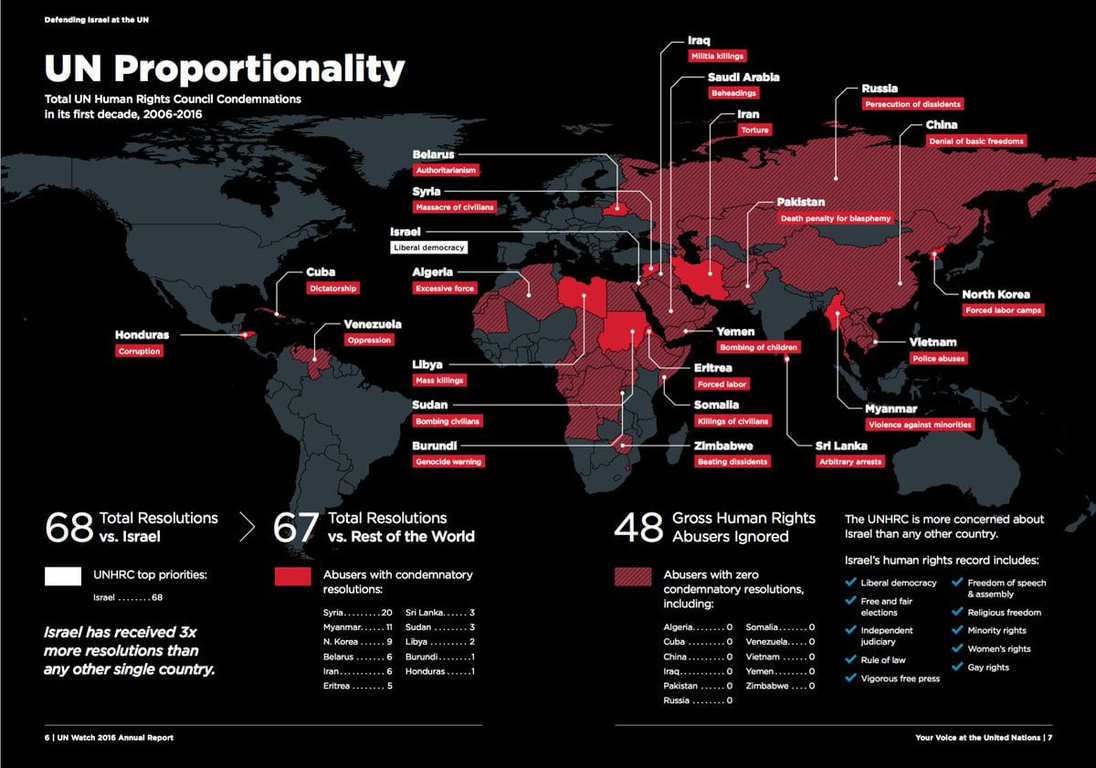
The United Nations continues to be a place where Jew-hatred thrives, and unfortunately, many democratic and free-of-the-information countries have participated in supporting anti-Semitic UN bodies and anti-Israel resolutions.
Not only Israel’s neighbours or Muslim countries are biased towards Israel, here’s an example from the other side of the globe: New Zealand’s record of supporting anti-Israel resolutions show the claims about balance, evenhandedness, and being an “honest broker” to be false.
The persecution of Jews has continued for more than two thousand years. Their most brutal manifestation was the Holocaust. Current anti-Semitism is aimed at Israel, the homeland of the Jews created on the basis of the Holocaust – of which more than a fifth of the population is, however, non-Jews – and at Jews around the world, with means ranging from brutal terrorism to condemning statements by various international organizations to boycotts instigated by individuals and Palestinian propaganda (BDS movement) and other demonstrations. However, the end result, according to a popular Israeli saying, is Am Yisrael Chai ( ’The people of Israel live’).
To destroy Hamas’s military power in Gaza – with the job now only halfway done – a continuation of the ground offensive into southern Gaza is needed. A serious challenge in carrying out this offensive is that most of the population is now in the south, after being evacuated from northern Gaza, effectively doubling the population of the area. In order to deprive Hamas of its last means of defense against the IDF, Israel must move the population of Gaza away from future combat zones.
Gazans can basically go to three areas:
Gazans can move through the IDF-controlled corridor to return to IDF-controlled northern Gaza. The problem is that most of the buildings and infrastructure in the area have been destroyed.
Gazans can be placed in designated protected areas in southern Gaza, where the IDF will not operate unless attacked. The downside is that Hamas would likely exploit it to protect its fighters.
Gazans can temporarily move to Sinai. At the moment, Egypt strongly opposes the idea.
Theoretically, Gazans could be received as refugees all over the world, but since no body is practically ready for that, the options are limited to Gaza and its surrounding areas.
I have previously presented theA Day after the Gaza Warplan , based on the Sinai Option, to resolve the humanitarian crisis of the Gazans immediately, to rebuild the devastated Palestinian territory in the medium term, and to implement a two-state solution in the long term. So my proposal is broader than a purely humanitarian temporary protection zone, and Egypt is therefore against it, at least for the time being. Since Hamas is against the immediate release of the hostages and the laying down of arms in order to achieve an immediate ceasefire, other ways forward must be sought to achieve a quick solution to the humanitarian crisis and even life in the region after the military defeat of Hamas.
The Israeli institute BESA (The Begin-Sadat Center for Strategic Studies) has also presented a fourth option worth considering, i.e. the establishment of temporary accommodation camps for the residents of Gaza in the Negev, Israel. According to the initiative, US military and civilian agencies, with the help of a coalition of Western and regional countries, would establish accommodation and service facilities in the Negev near Gaza, possibly in the Shivta – Ktzi’ot area. These camps would serve as temporary safe havens with services for the residents of Gaza for several months and up to a year until the end of the Israeli military operation.
According to BESA, the idea can be implemented with the following principles:
Gaza residents would be offered financial support and other incentives to temporarily leave the area.
American soldiers, with the help of international organizations, would receive Gaza residents at border crossings and perform security checks, identity verification and documentation.
The residents would be transported in secure convoys to large accommodation facilities established and secured with the support and funding of Western and Arab countries, led by the United States.
Israel would participate in security oversight of the process, allowing Hamas operatives to be identified to keep them out of the civilian population moving into the area.
The coalition managing the safe zone (Coalition for the Day After) would plan the process for their return to Gaza together with those living in the camps. The main local actors would be identified and the framework for a local civilian governance system would be established for the future administration of Gaza.
Once the military operation in northern Gaza is completed, the return of civilians – with a clear plan and private financial support – to their residential areas can begin.
The Shivta – Ktzi’ot area has been mentioned as a possible location for the temporary camp, where there is not only a national park but also two army bases and a large prison, which during the ongoing war has been used as a detention camp for Hamas fighters.
The merit of BESA’s plan is that it can be implemented with the resolve of Israel and the United States, and likely with the support of several Arab countries and the wider international community. Furthermore, the project would separate the civilian population of Gaza from the Hamas elements, enabling faster and more efficient Israeli operational activities in the southern and central Gaza areas than the current situation, when Hamas loses its civilian shield. The project would also create conditions for the development of civil society and local government immediately after Hamas’s military structure in Gaza has been destroyed and/or the hostages have been released.
The weakness of the plan is that it is mainly limited to the solution of the humanitarian crisis, which of course is also a significant improvement on the current situation. Instead, a longer-term vision of the Two-State model is missing, as is improving the status of Palestinians in the West Bank.
Hamas’ unprecedentedly powerful and brutal attack on Israel has 7/10 also led to an unprecedentedly powerful Israeli counter-operation in Gaza, resulting in an unprecedented humanitarian crisis for the civilian population of Gaza. Based on this, the international community has demanded an immediate ceasefire, which is not happening, however, because Hamas has refused to release its hostages and lay down its weapons, and because Israel wants to eliminate Hamas’ military power and release the hostages. According to Israel, the military operation against Hamas may take several more months, and therefore there is no quick help for the humanitarian crisis.
In order to solve the humanitarian crisis of the Gazans immediately, to rebuild the destroyed Palestinian territory in the medium term and to implement the Two-State solution in the long term, there is a pragmatic and feasible plan in which the primary winners would be the Gazans and Israel, the secondary beneficiaries would be Egypt and the Palestinians, and thirdly the USA and the broad international community.
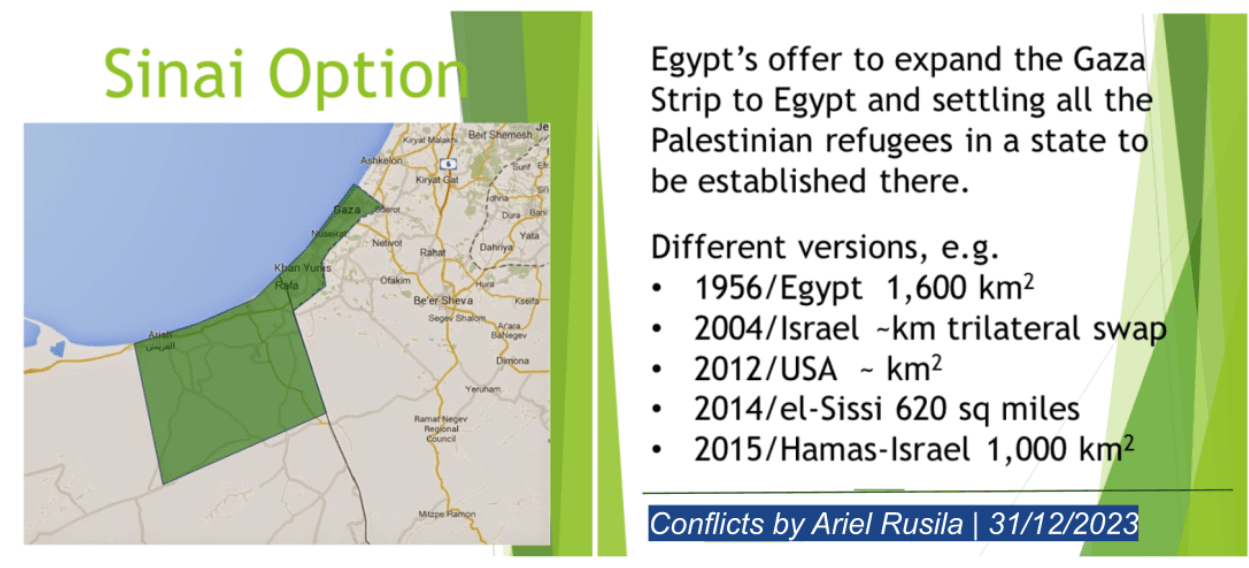
The solution described above is based on Egypt’s initiative – Sinai Option – presented in previous years to expand the Gaza Strip to multiple times its current size, to build apartments, a community structure and a viable economy in this area for Gazans and other willing Palestinians, and in the long term to form the area into either an independent demilitarised autonomy belonging to Egypt or a Palestinian state together with the Palestinians of the West Bank.
History of the Sinai option
The Sinai option indeed is not a new option to solve Egypt-Gaza-Israel conflict. According Middle East Monitor (MEMO) report [01 September 2014] Egypt offered Palestinian Authority’s President Abbas a Palestinian state in Sinai. Egyptian President Abdel-Fattah el-Sissi offered Palestinian Authority 620 square miles of land adjacent to Gaza in exchange for relinquishing claims to 1967 borders for the purpose of establishing a Palestinian state. PA President Abbas reportedly rejected proposal. Speaking in a meeting of Fatah leaders in Ramallah, Abbas said:“The plan, which was proposed in 1956, included annexing 1,600 square kilometres [620 sq mi] from the Sinai Peninsula to the Gaza Strip in order to receive Palestinian refugees.” He continued: “The plan is being proposed again, but we refused it.”
At its core, the Egyptian initiative proposes expanding the Gaza Strip to five times its current size and settling all the Gazans and Palestinian refugees in a state to be established there. In addition, the Palestinian Authority would be granted autonomy in the Palestinian cities in the West Bank in exchange for relinquishing the Palestinian demand to return to 1967 borders.
According Middle East Eye (MEE) the scheme became the centrepiece of the 2004 Herzliya conference, an annual meeting of Israel’s political, academic and security elites to exchange and develop policy ideas. It was then enthusiastically adopted by Uzi Arad, the conference’s founder and long-time adviser to Benjamin Netanyahu, the current prime minister. He proposed a three-way exchange, in which the Palestinians would get part of Sinai for their state, while in return Israel would receive most of the West Bank, and Egypt would be given a land passage across the Negev to connect it to Jordan.
Phase I: Solving the humanitarian crisis
When Gaza’s already poor water and waste water supply has been partially destroyed, the energy supply is at a minimum, the roads have been largely destroyed and the remaining hospitals are operating at their limits, a humanitarian crisis has emerged in a situation where the majority of Gazans have had to move away from the fighting to safer areas.
As the war against Hamas drags on, humanitarian aid has been very difficult to both deliver and distribute to Gazans in need. The situation will not improve much by increasing transport through Rafah and Kerem Shalom, because the number of people needing help is too large, the safe areas too small, and because even under them there may be underground structures of the Gaza metro that will continue to be destroyed.
The only practical and quick solution is to build a temporary settlement for the Gazans on the border between Egypt and Gaza, in which case the Gazans who have moved to the safe areas of southern Gaza only need to move a few kilometres southwest of their current positions.
Gaza has been held hostage by Hamas, Palestinian Islamic Jihad (PIJ) and other terrorist organisations committed to Israel’s destruction. Israel has tightened security over Gaza in order to prevent weapons, and materials that are used to make weapons, from entering. However Gaza has also been a safe haven for terrorists (e.g. Daesh) who have been attacking Egypt’s military and civil infrastructure. The group that has claimed the vast majority of Sinai attacks is Ansar Bayt al Maqdis (ABM): an Egyptian group founded in approximately 2011, which has reportedly less than 1,000 members. While the group’s original aim was to work against Israel, ABM now also targets the Egyptian security state and the country’s economic interests. ABM has loose links to al Qaeda franchise. In 2014, elements of the Ansar Bait al-Maqdis group pledged allegiance to the Islamic State of Iraq and the Levant (ISIL/ISIS) and proclaimed themselves Sinai Province, and a part of ISIS.
Acceptable solution for the humanitarian crisis of Gaza must allow goods and services to pass through to humanitarian zones while making sure Israel’s and Egypt’s legitimate security concerns are addressed. In order to prevent the spread of terrorism to the new humanitarian safe zone, the security authorities of Egypt and Israel must check all at least male persons in order to find out their possible connections with Hamas, PIJ and the like.
The international community already has a lot of experience in building such temporary refugee camps quickly, for example, after various natural disasters. Here an example about field hospitals:
Example: The field hospital
The international aid community has many challenges, for example, in the health care of Gazans: Treating the wounded, addressing the medical and psychosocial needs of the displaced populations, meeting routine medical needs of under-served local populations, and strengthening resilience through capacity building of the disrupted local healthcare system.
In response to reports by Gazans and news media that the Earlier during 2014 Israel–Gaza conflict IDF opened a field hospital at Erez Crossing on July 20, 2014, intending it to be for sick and injured Palestinians from Gaza.
Newest example about field hospitals is from Ukraine where Israel, which in all its past humanitarian missions deployed military field hospitals, decided, for the first time, to deploy a civilian field hospital.
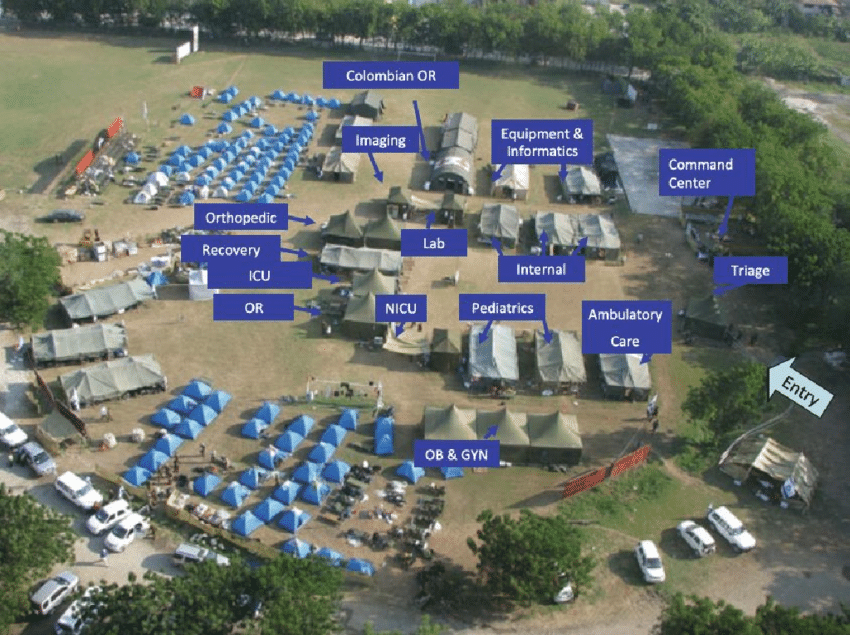
Layout of IDF Field Hospital. Credit: Farfel et al, 2011
According the Journal of global health It was probably the only state-level foreign field hospital deployed in Ukraine. This unique mission required addressing immediate challenges in the pre-deployment phase: Understanding the exact medical needs, defining essential logistic and security requirements, coordinating with the local government, and designing the field hospital accordingly. A Rapid Assessment Team was dispatched and worked in close collaboration with The Israeli Ministry of Foreign Affairs team on the ground and with The Ukrainian health and local authorities.
The hospital commenced operation on March 22, 2022 and was operational for six weeks. During this period 6161 patients were treated in the hospital of which 954 were children. Source: Sheba Medical Center.
The conditions treated ranged from chronic non-communicable diseases such as hypertension, diabetes and osteoarthritis, to acute and emergency conditions including, among others: infections, myocardial infarction, hypertensive crisis, acute appendicitis, acute cholecystitis, perforated duodenal ulcers and fractures. 65 patients were hospitalised and 59 patients underwent surgery. 103 patients had consultations utilising telemedicine technologies. 995 patients had laboratory tests, and 846 patients underwent imaging studies.
IDF has experience building Type 3 field hospitals (with 40 inpatient beds and two operating rooms capable of performing 15 to 30 surgeries per day along with other services, including rehabilitation) in less than 24 hours per hospital. Also the United Arab Emirates (UAE) has good ability for field hospitals; e.g. for earthquake victims in Turkey the hospital began operating four days after twin earthquakes hit southern Turkey on Feb. 6 2023, employing 50 personnel with 15 doctors.
Phase II: Reconstruction of the New Greater Gaza
After previous conflicts, Gaza has been rebuilt again and again, however, with Hamas always taking part of the funds intended for reconstruction for its own use, e.g. the construction of the Gaza Metro, missile and weapon production, and the luxury life of its elite. If the same thing happens again, there will be no significant improvement in the lives of Gazans after the humanitarian crisis. A significant reason for adopting the Sinai option is that with most of Gaza’s infrastructure destroyed, clearing the area would take significantly more time and money compared to the Sinai option, and despite this, the reconstructed area would not be nearly as viable compared to the larger virgin area.
The general planning of the second phase should start immediately when a political solution supporting it is on the horizon for the Siinai Option, in order to minimise the duration of the first phase. The construction of phase two would probably start with infrastructure projects – roads, municipal engineering, water, waste management, energy, telecommunication connections, harbour, airport, etc. At the same time, agricultural projects could be started outside the urban area. This would be followed by schools, hospitals and residential buildings.
There are already some separate plans for reconstruction that could be started immediately after a political solution is found. Here are some examples:
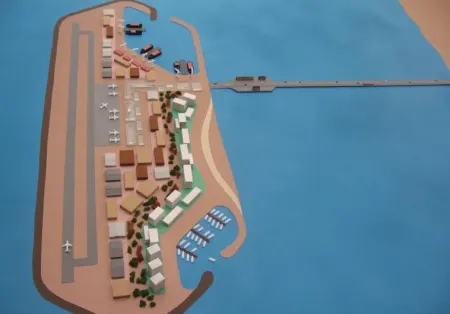
The idea to provide the Gaza Strip with an outlet to the rest of the world through a man-made island has been floating over a decade. The new project would include 5 km. bridge from the Gaza Strip into the planned 8 sq. km. chunk of land, which likely would have a marine port and, eventually, an airport, in addition to a hotel and small port for yachts. The project will cost some $5 billion. Serving the West Bank requires rail connection and also large railyards.
An alternative plan for Gaza International Port could be part of the expansion plan of the Egyptian Port of El Arish, located near Gaza’s southern border with Egypt. The total cost of the shore-based port in El-Arish would probably be $300 – 500 million and would take 2 – 3 years to construct. El Arish also has plenty of land for accommodating a Palestinian-leased, port-related industrial zone. El Arish also could be linked via rail to the West Bank through the Israeli rail system. (More in articles Gaza Seaport – A Threat or Change and Gaza Port in El Arish 5).
Access to water is a critical enabler of economic activity across many sectors of the Palestinian economy. By channelling significant investments into infrastructure that increases water supply, including desalination facilities, wells, and distribution networks. In the water sector constructing 10 new desalination plants in New-Gaza will provide quick access to potable water. Additional funding will support the development of new wastewater treatment facilities in the New-Gaza. This treated water will be reused, creating vast supplies of affordable water for agricultural and industrial use.
In the energy sector it is possible to rehabilitate existing Egyptian lines connected to New-Gaza as well develop natural gas pipeline to the New-Gaza Power Plant and build new renewable energy facilities. Also the whole North Sinai will benefit from the growing offshore natural gas production in the Eastern Mediterranean. In addition, support to power generation projects in the Sinai – such as 100 MWSolar Energy System – will increase the supply for new developments.
Agriculture sector has not met its potential due to limited access of farmers to land, water, and technology. This potential can be exploited in the New-Gaza.
New-Gaza has significant endowments of stone and marble, hydrocarbons, and other minerals. This project will provide support for the development of major resource reserves, such as the Gaza Marine natural gas field, oil fields.
Kilometres of coastline in New-Gaza along the Mediterranean Sea could develop into a modern metropolitan city overlooking the beach, drawing from examples like Beirut, Lisbon, Singapore, and Tel Aviv.
Phase III: Palestine (2-State)
The total area of Sinai is 62000 square kilometer. The North Sinai Governorate covers an area 27,574 km2 (10,646 sq mi) and has population (January 2023) 504,201 with density of 18/km2. It is bordered in the north by the Mediterranean Sea, in the south by South Sinai Governorate, in the west by Port Said, Ismailia, and Suez Governorates, and in the east by the Gaza Strip in Palestine (Rafah Governorate) and Israel (Southern District). Its capital is the city of El Arish.
The Gaza Strip is 365 km2 (141 sq mi) and has a population (2022 estimate) 2,375,259 and its population density is 6,507/km2.
In addition to the sparse population, establishing a New-Gaza in Sinai has its own advantages in that the local population feels a lot of sympathy for the Gazans, even though the top management of the state has good and solid security cooperation with Israel. And after all, Egypt has had a peace treaty with Israel since 1979.
When the humanitarian crisis has been temporarily brought under control (Phase I) and when the reconstruction work of New-Gaza has progressed well in cooperation with Egypt, Israel and international aid organisations (Phase II), it is time to transfer the administration and the responsibility for the withdrawal mostly to the residents of New-Gaza, with the goal of self-governing autonomy and, in the best case, a viable Palestinian state together with the Palestinians of the West Bank.
Successful transformations from international and technocratic government self-governance draw from core principles – such as representative democracy, the rule of law and anti-corruption safeguards – to build critical institutions and implement policy reforms – such as renewing the education system – are crucial elements in this vision’s strategy.
The aim of the phase III is to encourage the Palestinian public sector to provide the services and administration necessary for the Palestinian people to have a better future. Robust civil society institutions and a free press are important parts of any well-functioning democracy. Preserving and expanding these important institutions within the West Bank and Gaza will require new laws and practices that protect their independence and improve their capacity.
In my opinion it is clear that the road map of the 2-State model has come to a dead end. However, this does not mean that the vision itself should be abandoned as the other alternatives are worse (1-State or Zero option or Status Quo) or unrealistic in the medium term (3-State). The best short-term solution towards the 2-state model is Constructive unilateralism where related actions can be decided by Israel immediately.
The vision of two states and the road map of constructive unilateralism to achieve it is based on the assumption that Israel should move towards the division of the land between the Palestinians and Israelis in order to maintain the future of Israel as a Jewish democratic state. Israel should consider imposing the borders of a future Palestinian state (i.e. two states for two nations). As long as Israel wants to be part of the democratic world – it must give equal rights to all human beings living in the borders of the country. Then, it is for the Palestinians to decide to create their Palestinian State, which is in their interests and they will make their own decisions.
Desperately overcrowded, short on basic resources like fresh water, with its infrastructure intermittently destroyed by Israeli bombing campaigns Gaza is and has been like a giant pressure cooker waiting to explode and this happened on 7/10/2023.
Egypt is at the heart of plans to solve the problem on Israel’s and Gazans behalf.
If Hamas as political movement is to play any role in a Palestinian government, it must commit to the path of peace with the State of Israel by adopting principles such as recognizing the State of Israel, committing to nonviolence. Hamas, PIJ, and all other militias and terror organizations in Gaza are disarmed; and New-Gaza is fully demilitarized.
For comprehensive peace to be achieved, it is up to the Palestinian people to make clear that they reject the ideologies of destruction, terror and conflict, and unite for a better future for all Palestinians.
The people of Gaza have suffered for too long under the repressive rule of Hamas. They have been exploited as hostages and human shields. Hamas has failed the people of Gaza and has diverted money belonging to the Palestinians of Gaza, including funds provided by international donors, to attack the State of Israel, instead of using these funds to improve the lives of the people of Gaza.
If and when Israel destroys Hamas’s military capacity and structures and all Israeli captives and remains have been, it will be possible to turn a new course in cooperation with Egypt, moderate Arab powers and the international community.
The Egyptian initiative proposes expanding the Gaza Strip to five times its current size and settling all the Palestinian refugees in a state or an autonomy to be established there. Under the initiative, this state or autonomy will be demilitarised. In my opinion annexing part of Sinai to Gaza might partly solve the Arab-Israeli Conflict.
Ariel "Ari" Rusila is a blogger and former development project management expert from Finland with a special interest in the Balkan region. His other interests include geopolitics, conflicts and The Great Middle East. <"Conflicts By Ariel Rusila [aka ex-BalkanBlog] - ISSN 2342-6675 - covers issues of conflicts and regionally the Balkans (esp. Serbia), the Black Sea region and MENA (the greater Middle East and North Africa and esp. Israel) regions as well EurAsia.
Member of
* Anna Lindh Foundation NW * G.N.S. Press Association & European News Agency * International Press Card * EzineArticles Expert Author * Authors.com * Peace & Collaborative Development NW * Take-A-Pen * Suomi-Israel ry/Jyväskylä International Solidarity Work (member of board 2017-18) * Left Alliance/FIN * European Left/Agriculture WG


 Posted by Ariel Rusila








 Layout of IDF Field Hospital. Credit: Farfel et al, 2011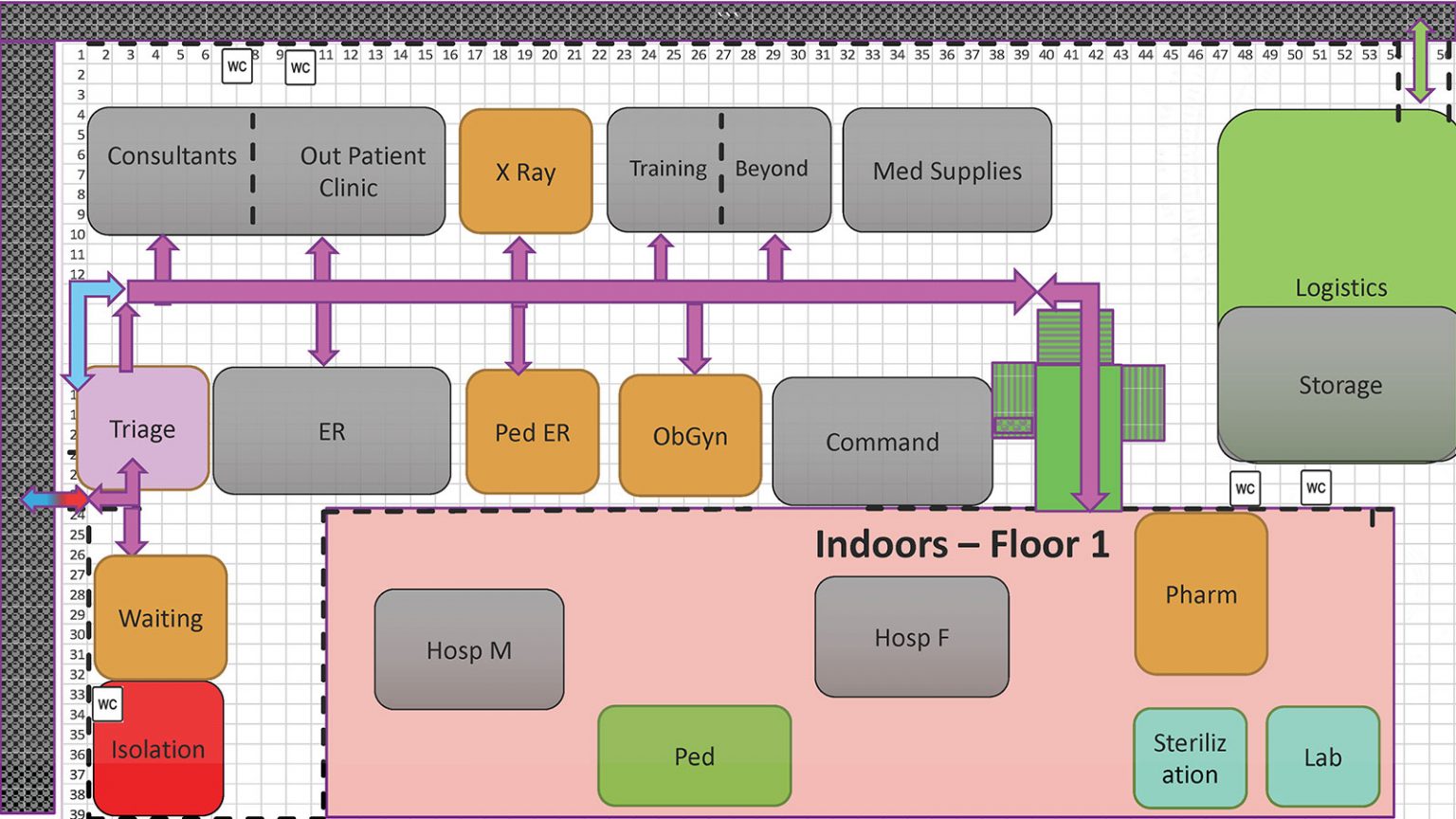










 Conflicts by Ariel Rusila

